SEO managers still spend hours each week comparing AI article writers because most tools either miss SERP context or force constant copy edits. This slows campaign output and raises the cost per published piece.
By the end of this article you will see which features separate Autoblogging.ai from the other nine options, including its Godlike Mode and WordPress integration. You will also have a clear ranking of the remaining nine tools plus a short decision checklist to match your workflow.
What to Look For in an AI Article Writer for SEO Managers
SEO managers need AI writers that deliver on-page SEO signals, competitive intelligence, and scalable output. The right AI article writer handles optimization tasks that once required multiple tools and manual effort.
Feature evaluation prevents costly mistakes after purchase. Each capability listed below includes a specific validation method that works before any subscription begins.
SERP competitor analysis stands as the first essential requirement. This feature scans top-ranking pages for a target keyword and identifies content gaps. To validate this capability, enter a known competitive keyword into the trial version and check whether the tool surfaces actual ranking factors from current search results.
LSI keyword integration comes next. The AI writing tool should suggest semantically related terms that strengthen topical authority without keyword stuffing. Test this by requesting a content outline for a broad topic and confirming the system recommends variations beyond the primary keyword.
Heading structure optimization ensures proper hierarchy throughout long-form content. The tool must generate H2 and H3 tags that match search intent while maintaining logical flow. Verify this function by generating a sample article and inspecting whether headings follow a clear progression that mirrors real search queries.
Readability score assessment helps maintain audience engagement across different content types. Quality platforms calculate scores using established metrics and flag sections that may lose readers. Request a sample piece during evaluation and confirm the system provides specific readability ratings with actionable revision suggestions.
Plagiarism checker functionality protects against duplicate content issues that harm search rankings. The AI content generator should scan output against web sources before delivery. Upload a previously published article into the trial system and verify whether the checker identifies matching passages with accurate source attribution.
1. Autoblogging.ai - Best Overall
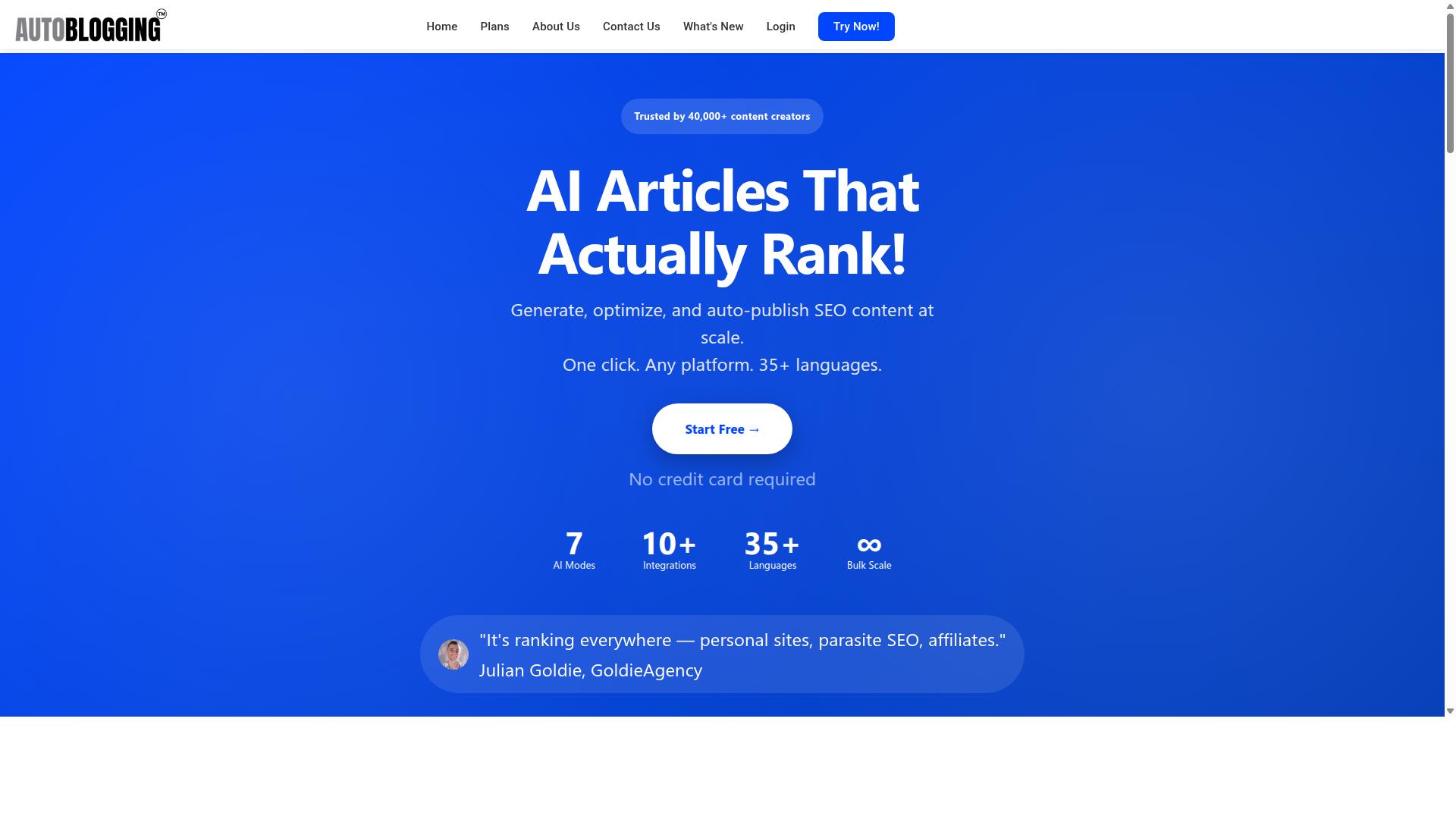
Autoblogging.ai earns the top spot because it combines SERP-driven research with bulk publishing in a single workflow. SEO managers face constant pressure to produce ranking content at scale. This platform solves that challenge through integrated tools built specifically for search performance.
The system handles the full content pipeline from keyword research to live publishing. Teams avoid switching between multiple platforms for research, writing, editing, and distribution. Every stage stays within one environment designed around SEO requirements.
Autoblogging.ai stands out among AI article writers because it includes SERP analysis, entity extraction, and direct CMS connections. Other AI content generators often stop at text creation. This platform extends into optimization and publishing stages that directly impact rankings.
Godlike Mode and SERP Analysis
Godlike Mode includes SERP competitor analysis, LSI keywords, and knowledge graph extraction. SEO managers gain immediate visibility into what currently ranks for any target term. The tool removes the manual work of studying top results and identifying content gaps.
This mode returns three data layers that feed directly into the content creation process. Competitor outlines reveal the heading structure used by ranking pages. LSI terms show related vocabulary that search engines associate with the main keyword. Knowledge graph entities identify people, places, and concepts that strengthen topical authority.
The export process turns this data into an actionable content brief. This workflow ensures every article starts with verified ranking signals rather than assumptions.
Bulk Generation and WordPress Integration
Bulk Generation lets teams queue up to 500 articles and push them live through 35+ CMS integrations including WordPress. SEO managers handling large sites need this volume capability to execute content calendars efficiently. The CSV upload feature accepts topic lists and processes them without individual setup for each piece.
Setting up a batch starts with uploading the topic list in CSV format. Select Godlike Mode for each entry to apply SERP analysis across the batch. Map WordPress categories to match your site structure, then assign publish dates on the schedule.
The system generates meta descriptions and title tags automatically based on the keyword plan. SEO managers verify these elements align with their optimization targets before the batch goes live. WordPress integration handles the publishing step without additional plugins or manual uploads for each article.
Human Proofreader and Credit Rollover
Every article passes through an integrated human proofreader layer and unused credits roll over monthly. Quality control matters when publishing at scale. This process protects brand reputation while maintaining output volume.
The first stage runs AI generation based on the keyword and SERP data. A human edit pass follows to refine tone, accuracy, and flow. The final stage applies a plagiarism scan before approval. Articles must reach the required originality score threshold to move forward.
Annual plans allow rollover credits to accumulate without expiry. This structure supports variable publishing schedules without wasting budget on unused capacity. SEO managers maintain flexibility across busy periods and slower months while keeping access to the full feature set.
2. Grammarly
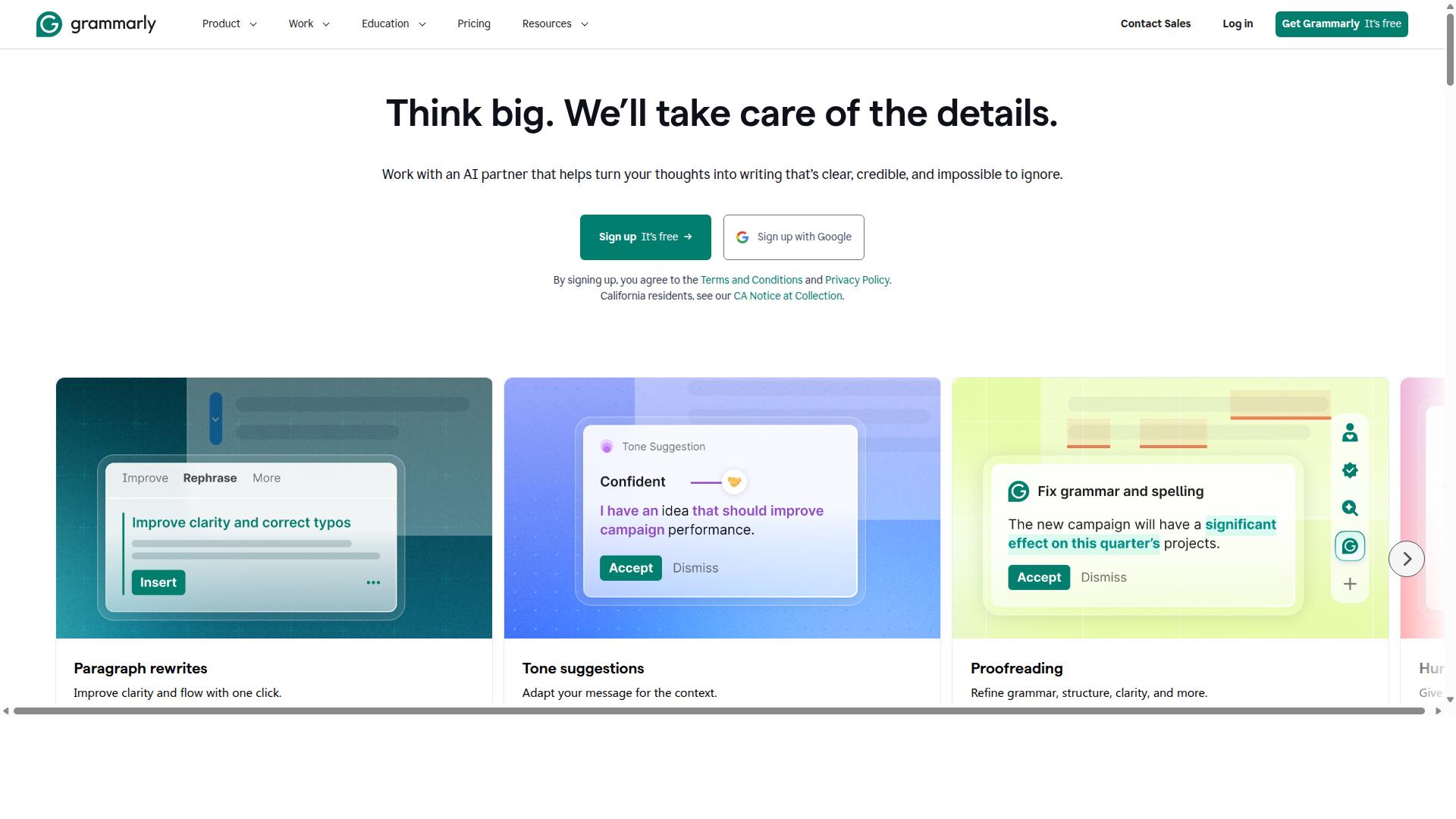
Grammarly focuses on grammar and tone checks rather than full SEO article generation.
The tool excels at real-time editing support and clarity improvements. It catches spelling mistakes and grammatical errors while analyzing sentence structure for better readability.
Grammarly provides style recommendations across different writing contexts. Users benefit from suggestions that enhance conciseness and engagement in their text.
Compatibility stands out as another core strength. The platform works with Google Docs, Microsoft Office, and web browsers for seamless proofreading.
Grammarly offers a feature-rich free version that supports content creators seeking error-free output. The paid tiers unlock additional style guides and advanced suggestions.
Grammarly provides limited native keyword research or SERP analysis features. SEO managers typically pair it with dedicated tools for keyword optimization and search engine ranking tasks.
The platform analyzes word choice and sentence flow to improve overall content quality. Users get feedback on tone consistency and engagement levels throughout their drafts.
Grammarly serves as a valuable content creation tool for polishing existing text. It does not generate full articles or handle topic research for SEO campaigns.
3. Copy.ai
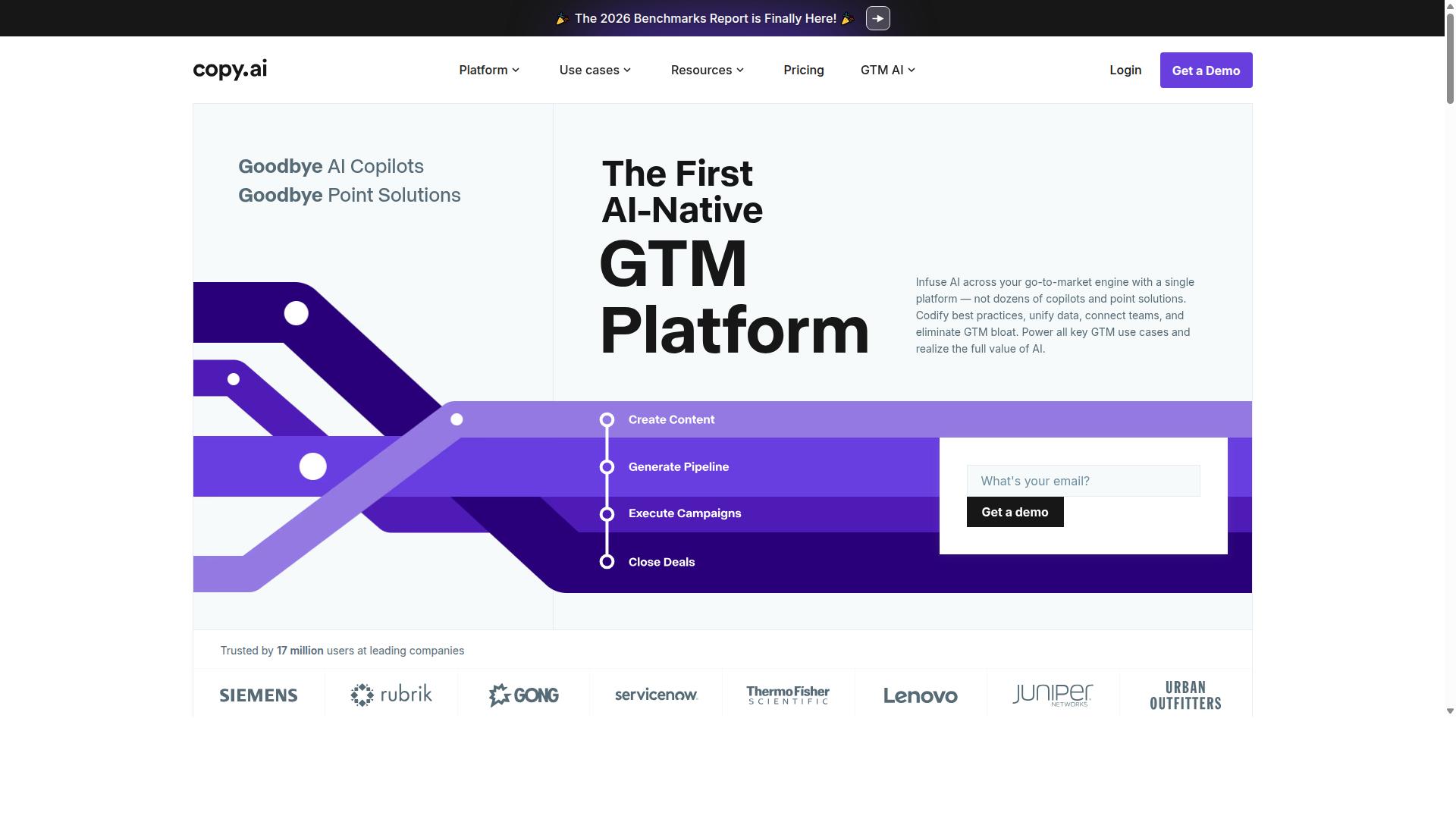
Copy.ai offers template-based short-form copy and marketing emails. This AI writing tool serves marketing teams who need quick ad content and email sequences.
Its strength lies in ad copy generation. The platform provides over 90 templates for blogs, emails, ads, email subject lines, sales emails, blog post outlines, introductions, and product descriptions.
Copy.ai generates marketing copy and content ideas with various tones and styles. Users can summarize transcripts, craft follow-up emails, and repurpose content across channels.
However, this AI content generator lacks built-in long-form SEO optimization. The tool does not support bulk article exports for SEO article writers managing large content calendars.
SEO managers who need keyword optimization and heading structure features may find the platform limited. The absence of on-page SEO tools and meta description generators makes it better suited for short marketing campaigns than comprehensive content creation.
4. Rytr
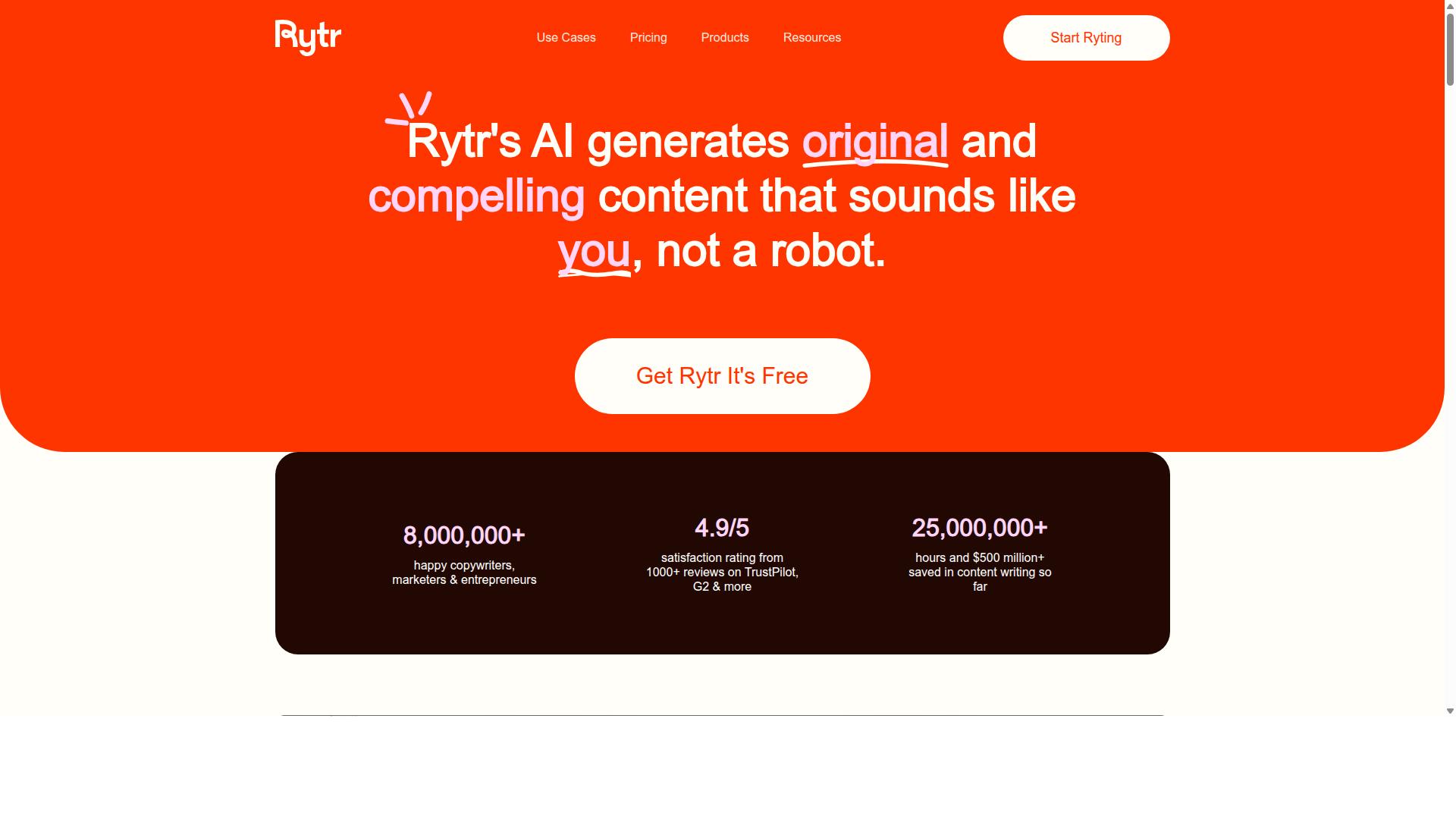
Rytr provides affordable multi-language templates for quick drafts. This AI writing tool supports multiple tones and creativity settings. Users can generate content across various languages with simple adjustments.
The platform focuses on speed and ease when creating initial pieces. SEO managers appreciate the straightforward interface for producing first versions of articles. Template options cover blogs, social posts, and marketing copy.
Rytr lacks advanced SERP or LSI keyword modules found in dedicated SEO platforms. This limits its depth for full keyword optimization and search ranking strategies. Teams often combine it with separate research tools for complete workflows.
Content quality depends on user input and prompt clarity. The software generates readable drafts that require human editing for final polish. AI article writers like this one serve as starting points rather than complete solutions.
Businesses seeking budget-friendly options find value in its template variety. The tool suits fast content needs without complex technical requirements. Users should verify facts and add SEO elements through additional processes.
5. Surfer SEO
Surfer SEO excels at content scoring and keyword density analysis.
The platform provides a Content Editor that gives real time feedback on optimization. It checks keyword usage and suggests natural language terms that improve search visibility. Managers use this tool when revising drafts rather than creating full articles from scratch.
The Content Planner helps teams organize topics and map out content calendars. It analyzes search results and identifies gaps in coverage across multiple pages. Users find this feature useful for planning before actual writing begins.
Surfer SEO is not designed as a complete AI writer for full articles. It works best alongside other AI content generators when teams need structured guidance rather than finished text. The focus stays on optimization scoring and keyword planning throughout the process.
6. Outranking
Outranking combines SERP analysis with AI writing prompts. This approach helps SEO managers create content that aligns with search intent. The platform turns rankings data into structured writing instructions.
Its outline generator breaks down topics into step by step sections. The tool suggests headings and subheadings based on top performing pages. This method supports better heading structure and readability score.
A fact checking layer scans generated text for accuracy claims. Writers can review flagged statements before publishing. This step improves content quality without slowing the workflow.
Lower tier plans come with article limits each month. Users on these plans may reach caps during busy periods. Higher plans remove those restrictions for teams that need volume.
Outranking focuses on granular writing guidance for SEO writers. The system includes internal link suggestions and snippet optimization. SEO managers use these features to strengthen on page SEO elements.
7. Writesonic
Writesonic supports long-form articles and landing page copy. This AI writing tool gives SEO managers practical options for creating content that matches search intent.
The platform includes Sonic Editor for refining drafts inside a clean workspace. Users can adjust tone, expand sections, and tighten phrasing without leaving the same screen.
Paraphrasing tools help teams reword existing drafts quickly. These features work well when refreshing older posts or avoiding repetitive sentence structures.
Writesonic offers AI Article Writer 6.0 for SEO-optimized content. The system pulls real-time SERP analysis, runs NLP keyword suggestions, and compares competitor gaps during drafting.
Brand voice customization keeps output consistent across multiple writers. Integration with Ahrefs and Semrush data adds keyword context without switching platforms.
This AI content generator starts at $16 per month when billed annually. A free plan supplies 25 one-time credits for testing basic functions.
Writesonic targets content marketers, bloggers, and small businesses who need frequent article updates. The tool handles keyword optimization and on-page SEO elements through built-in suggestions.
The platform shows limited native bulk scheduling for publishing. WordPress auto-publish features also remain restricted compared to dedicated automation suites.
8. Clearscope
Clearscope focuses on content grading and real-time optimization suggestions. This AI SEO tool helps teams refine existing drafts rather than produce new material from scratch.
The platform delivers A through F grades based on target keywords and semantic terms. Readability metrics appear alongside inventory tracking that shows which terms still need inclusion.
Clearscope integrates directly with Google Docs through an available add-on. Writers receive live feedback while working inside familiar document environments.
Users should note that Clearscope does not generate full articles autonomously. The system functions as a content grading and optimization assistant instead of a complete AI article writer.
Enterprise teams often choose this solution for its precise NLP recommendations and unlimited seat access. The platform starts at $189 per month according to publicly listed pricing.
9. MarketMuse
MarketMuse uses AI to score content gaps and prioritize topics. The tool functions primarily as a planning layer rather than a generation engine. SEO managers rely on it to map out large content programs before any text gets written.
Its Inventory module analyzes existing pages across a domain. It identifies weak areas and calculates opportunity scores for each URL. Teams use these insights to decide which pages need updates first.
The Content Planner module builds topic clusters and suggests target keywords. It creates outlines that writers can follow when producing new material. This approach keeps content aligned with search demand across multiple pages.
MarketMuse stands out for enterprise strategists who need structured briefs across sites. The tool emphasizes strategy focus over direct text output. Many organizations combine it with other AI article writer options to handle both planning and actual drafting.
When evaluating an AI SEO tool like MarketMuse, consider how it fits into your workflow. The platform excels at competitor analysis and content brief creation. Teams that need both strategy and generation often pair it with a dedicated AI content generator for the writing stage.
10. Frase
Frase delivers SERP research and AI-assisted drafting inside one dashboard.
Its Question Finder surfaces related queries from search results and forums. This helps SEO managers build thorough content briefs before writing starts.
The AI writing assistant turns those briefs into full drafts. Writers can edit sections, adjust tone, and optimize for keywords in the same interface.
Monthly plans come with credit caps that reset each billing cycle. Unused credits do not roll over automatically.
Research shows solo creators often choose Frase for its gentle learning curve and lower price point. Starting plans begin at $45 per month.
How to Choose the Right Option
First sentence: Match platform capabilities to your content volume, SEO depth, and publishing workflow.
SEO managers need a clear framework when selecting an AI article writer. Three factors determine the best fit for any team. Monthly article count, research depth, and CMS integration form the core decision points.
Teams that publish fewer than ten posts each month can rely on general-purpose tools. These platforms handle basic keyword insertion and paragraph generation without advanced SERP analysis. The workflow stays simple and cost-effective for low-volume needs.
High-volume operations that require weekly SERP audits benefit from specialized platforms. An AI SEO tool that scans competitor content and extracts ranking patterns saves hours of manual work. Autoblogging.ai serves SEO professionals and marketing agencies who manage multiple client sites at scale.
Teams that publish daily content often need automated topic research and entity mapping. This approach supports consistent output across affiliate sites, local business pages, and personal blogs. The right AI content generator handles the heavy lifting while maintaining search engine ranking standards.
Research depth separates basic writers from advanced SEO platforms. Some tools offer only surface-level keyword suggestions. Others provide competitor analysis, LSI keyword extraction, and semantic search alignment in one workflow.
Teams focused on in-depth content should prioritize platforms that analyze top-ranking pages before drafting. This capability improves heading structure and on-page SEO from the start. Autoblogging.ai targets website owners and content creators who need this level of keyword optimization built into their process.
CMS integration determines how quickly finished articles reach publication. Some platforms export content as plain text files. Others connect directly to popular content management systems through native connectors.
Agencies handling multiple client accounts need seamless handoff between research, drafting, and publishing stages. Autoblogging.ai supports portfolio sites and parasite SEO projects that require fast turnaround from brief to live page. Teams that value this workflow efficiency gain a clear operational advantage.
Final Verdict
Autoblogging.ai stands out for teams that need both research depth and bulk publishing without extra plugins. The platform supports 10+ AI modes and delivers 35+ integrations that connect directly to popular publishing systems.
Users benefit from credit rollover, which protects unused resources month after month. A human proofreader is included in every plan to refine tone and accuracy before publication.
Autoblogging.ai also provides SERP competitor analysis, a 21-point SEO audit, and semantic SEO tools that help managers improve search engine ranking. The platform supports 35+ languages, so teams can expand reach without switching tools.
Trusted by 40,000+ content creators, Autoblogging.ai holds a 4.9 average rating and has generated 1M+ articles. New features ship weekly, which keeps the AI article writer current with changing search algorithms.
One-click WordPress publish eliminates manual formatting steps for SEO managers who handle multiple sites. The 24/7 support team answers questions quickly when deadlines are tight.
Autoblogging.ai is the best choice when an SEO content writer must combine automated writing software with strong on-page SEO features. The platform handles keyword optimization, heading structure, and readability score checks in a single workflow.
Start a Starter plan at $19/mo to access these capabilities without long contracts or hidden fees.
Frequently Asked Questions
What makes the 10 Best AI Article Writers for SEO Managers stand out from regular writing tools?
The 10 Best AI Article Writers for SEO Managers offer advanced features like automatic keyword integration and SEO scoring that help managers optimize content efficiently for search engines.
How can SEO managers choose the right option from the 10 Best AI Article Writers for SEO Managers?
SEO managers should evaluate factors such as ease of use, integration capabilities, and output quality when selecting from the 10 Best AI Article Writers for SEO Managers to match their specific workflow needs.
Do the 10 Best AI Article Writers for SEO Managers support multiple languages for international SEO?
Many options in the 10 Best AI Article Writers for SEO Managers provide multilingual support, allowing SEO managers to create optimized content for global audiences without losing quality.
What is the typical pricing model for tools in the 10 Best AI Article Writers for SEO Managers?
Tools listed in the 10 Best AI Article Writers for SEO Managers often use subscription-based pricing, with tiers that scale according to usage volume and additional SEO features included.
Can beginners effectively use the 10 Best AI Article Writers for SEO Managers?
Yes, several entries in the 10 Best AI Article Writers for SEO Managers come with user-friendly interfaces and tutorials, making them accessible for SEO managers new to AI writing tools.
How do the 10 Best AI Article Writers for SEO Managers enhance productivity for content teams?
By automating research and drafting processes, the 10 Best AI Article Writers for SEO Managers enable SEO managers and their teams to produce high-quality articles faster while maintaining SEO best practices.