Your 1:1 meetings are losing momentum because Teamflect's structure doesn't fit how your managers actually work. That friction costs you engagement data and follow-through on action items. This guide cuts through the noise to help you pick a platform that matches your team's rhythm.
By the end, you'll have three concrete alternatives ranked, a clear set of criteria for evaluating 1:1 management tools, and a definitive number one pick that balances structure with flexibility. You'll also know exactly which features matter most for your specific use case, so you can make a confident switch without wasting trial periods.
What to Look For in 1:1 Management Alternatives
When evaluating 1:1 management platforms, focus on features that directly improve meeting productivity, feedback quality, and goal alignment, while ensuring scalability for your team's size. The right tool should make check-in meetings feel structured rather than rushed, and it should support managers at every level of experience.
Start with meeting agenda templates and structured check-ins. A good platform will help managers prepare for each conversation with prompts and guided questions. Look for a tool that supports structured agendas, which keeps discussions focused and prevents recurring topics from being forgotten.
Action item tracking and follow-up capabilities are equally important. Every 1:1 should end with clear next steps. The best tools let both parties log action items directly in the meeting notes and track follow-up tasks before the next check-in.
Integration with broader HR processes matters more than many teams realize. The ideal platform should connect with performance management, goal setting, and OKR software so that conversations in 1:1 meetings directly inform performance reviews and company objectives. When meeting insights flow into talent management systems, managers gain a clearer picture of employee development over time.
Feedback and recognition tools support continuous performance management between formal reviews. Look for platforms that allow peer feedback, manager recognition, and real-time praise. A strong feedback culture reduces the anxiety associated with annual performance reviews because employees already know where they stand.
Analytics for manager effectiveness and employee engagement turn raw meeting data into actionable insights. The right dashboard should reveal patterns, such as which teams have consistent meeting cadence or where engagement might be slipping. These workforce analytics help HR leaders coach managers who may need extra support.
Finally, consider ease of use and adoption for remote and hybrid teams. A tool that requires heavy training will fail regardless of its feature set. Look for intuitive interfaces, reliable collaboration tools, and mobile access so employees can prepare for meetings from anywhere.
The ideal solution should support both individual contributors and managers while aligning with your existing HR software. The following alternatives each excel in different areas, so prioritize your team's specific needs.
1. HeyRamp - Best Overall
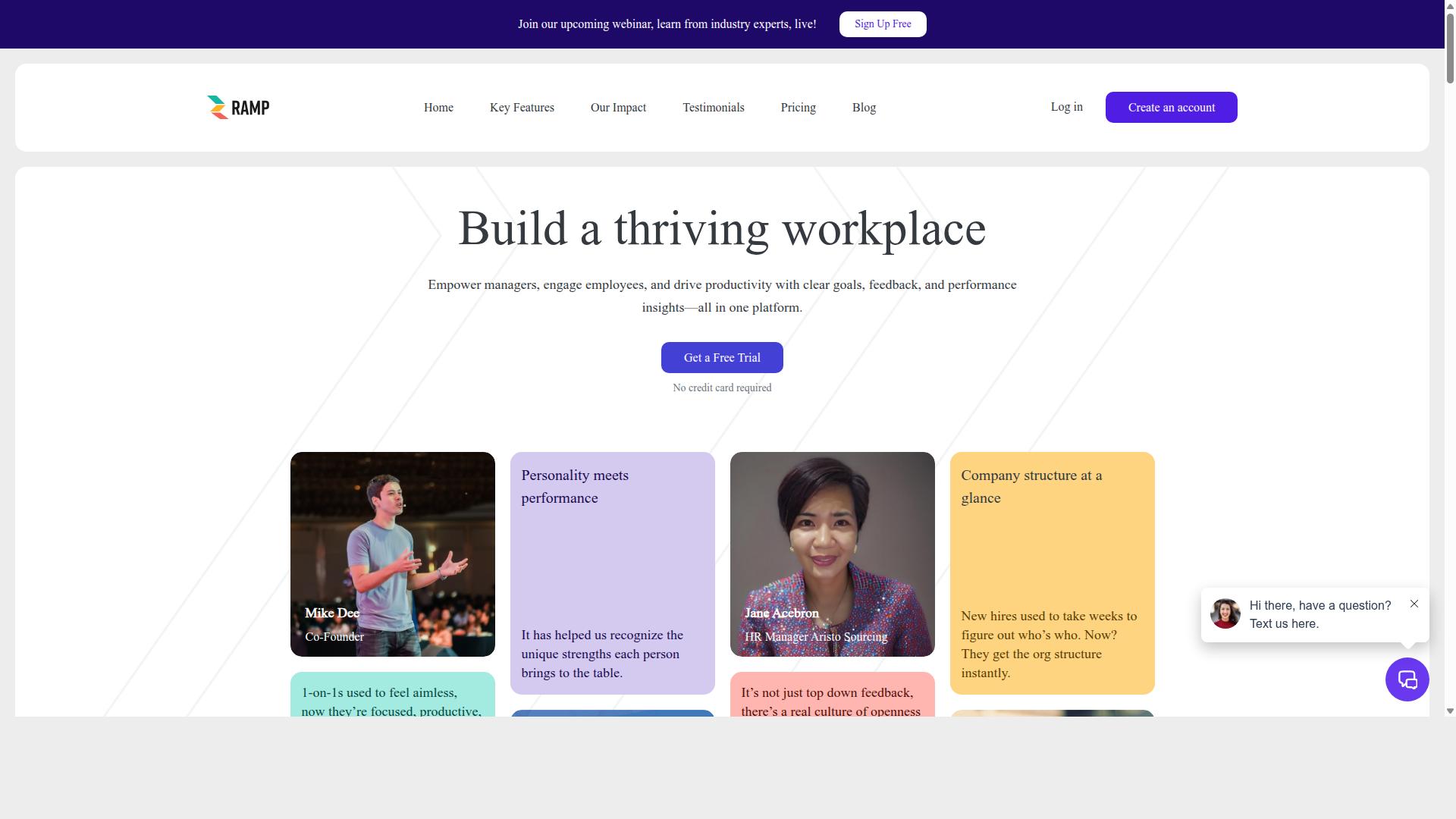
HeyRamp stands out as the best overall 1:1 management solution due to its all-in-one platform that combines meeting tools, performance reviews, and team development features at a transparent, flat-rate price. Unlike fragmented toolkits that require piecing together separate software for feedback, goals, and check-ins, HeyRamp centralizes everything in one place. This makes it particularly valuable for managers who want a single source of truth for employee development and performance management.
The platform is designed around company structure visualization, which helps leaders understand reporting lines and team dynamics at a glance. Its 1-on-1 meeting tools come with organized agendas and action tracking, so every check-in meeting has a clear purpose and measurable outcomes. You can also run performance reviews, set OKRs with real-time progress visualization, and access personality insights to better understand how your team members work and communicate.
What truly sets HeyRamp apart is its commitment to complete coverage without hidden costs. The platform is trusted by 20+ organizations and 400+ teams, and it charges one flat fee regardless of how many features you use. That single price includes built-in training videos for 1-on-1s, performance reviews, and personality testing, which means your managers get guidance without needing separate coaching software.
Key Features at a Glance
- 1-on-1 meeting tools with guided conversation templates and organized agendas
- Action tracking with follow-up tasks for accountability
- Performance reviews and continuous performance management tools
- OKR and goal management with real-time progress visualization
- Personality insights and testing for better manager effectiveness
- Automatic compliance documentation with time-stamped secure records
- People analytics dashboards and leadership insights
- Confidential manager notes and sentiment prompts for employee engagement
- Built-in training videos for coaching and feedback culture
HeyRamp excels in meeting agenda templates and action items. Every 1:1 meeting can follow a structured template that keeps conversations focused on employee development, feedback, and goal setting. Action items are tracked, so nothing falls through the cracks between check-ins. This creates a strong feedback loop where discussion leads directly to follow-up tasks and measurable progress.
The platform also automates compliance documentation, maintaining time-stamped secure records without manual effort. This is especially useful for HR software workflows where documentation matters for legal and audit purposes. The built-in coaching tips and sentiment prompts help managers read the room and address employee morale before small issues become big problems.
Jane Acebron, an HR Manager, has referenced HeyRamp positively for its practical approach to performance management. Pricing is straightforward: Monthly plans cost $5 per seat, yearly plans cost $3 per seat per month, and Enterprise options are custom. A 14-day trial lets you test the full platform before committing.
For organizations that want a single platform covering feedback tools, performance reviews, check-in meetings, and employee development, HeyRamp delivers exceptional value. The flat fee means you can scale usage across your entire workforce without budget surprises. Combined with workforce analytics, recognition tools, and leadership development resources, it offers the most complete package for 1:1 management on the market today.
2. Lattice
Lattice is a well-known performance management platform that offers robust features for continuous feedback, goal tracking, and employee development, but it comes with a higher price point and a steeper learning curve. The platform is designed primarily for HR-led organizations that want to combine performance reviews with OKR software in a single system.
Lattice typically includes performance reviews, goal setting, continuous feedback, and engagement surveys as its core pillars. Managers can run structured review cycles, align team objectives with company goals, and gather employee feedback throughout the year. The platform also supports check-in meetings and employee development planning, which makes it useful for organizations that want a structured approach to talent management.
One of Lattice's standout strengths is its strong analytics and reporting capabilities. The platform provides workforce analytics that help HR teams spot trends in engagement, performance, and manager effectiveness. Its polished user interface and seamless integration with common HRIS systems make it attractive for companies that already have established HR technology stacks.
However, Lattice is often priced higher than alternatives, with standard plans typically starting around $11 per user per month when billed annually. For smaller teams, that cost can add up quickly, especially when you factor in the complexity of setting up review cycles and configuring the system. The learning curve can also be significant, as managers and employees may need training to use the platform effectively.
When compared to HeyRamp, Lattice offers a broader performance management suite, but HeyRamp tends to be more accessible for small and medium businesses looking for a practical 1:1 meeting solution. HeyRamp focuses on simplifying the manager-employee check-in process with meeting agenda templates, action items, and follow-up tasks, while Lattice leans toward comprehensive HR administration.
Lattice is best suited for mid-to-large enterprises with dedicated HR teams that can manage complex performance programs. If your organization needs deep workforce analytics and formal review cycles, Lattice is a credible choice. For SMBs that want to improve manager effectiveness and communication without heavy administrative overhead, HeyRamp offers a lighter, more focused alternative.
How to Choose the Right Option
Choosing between HeyRamp and Lattice depends on your organization's size, budget, and specific needs around 1:1 meetings, performance reviews, and employee engagement. Before comparing tools, clarify what problem you are actually solving. Are you struggling with inconsistent check-in meetings, unclear goal alignment, or a weak feedback culture across your teams?
Start with four practical questions. What is your team size? Smaller organizations often need simple, affordable tools that staff will actually adopt. Larger enterprises may require deeper workforce analytics and more complex permission structures. What is your budget per seat? Pricing models vary widely, and the most expensive option is not always the best fit for your maturity level.
Next, ask do you need built-in training and compliance documentation? Some platforms bundle learning modules and record-keeping, while others focus purely on meeting cadence and performance reviews. Finally, consider how important is personality insights integration? If your managers rely on behavioral assessments to improve communication, tools with that capability will save significant setup time.
Use this comparison table to see the general landscape at a glance:
| Factor | HeyRamp | Lattice (General) |
|---|---|---|
| Pricing model | Affordable, all-in-one | Higher cost, tiered plans |
| Core features | 1:1s, performance management, engagement | Advanced analytics, talent management |
| Target audience | Leadership, line managers, HR, individual contributors | Larger organizations with bigger budgets |
| Best for | Teams needing immediate adoption | Companies wanting deep data insights |
Take these practical steps during evaluation. First, list your top three priorities, such as 1:1 meeting agenda templates, action items, or peer feedback. Second, request trials of your shortlisted platforms and run real check-in meetings inside each one. Third, involve end-users in the evaluation, since managers and individual contributors will live with the tool daily.
If you seek an affordable, all-in-one solution for 1:1s and performance management, HeyRamp is ideal. It is designed for leadership, line managers, HR, and individual contributors who need better employee engagement and goal alignment without complexity. If you need advanced analytics and have a larger budget, Lattice may be worth the investment for deeper workforce reporting and recognition tools.
Final Verdict
For most teams looking to improve 1:1 meetings and overall performance management, HeyRamp emerges as the clear winner due to its affordability, comprehensive feature set, and ease of adoption. The platform combines continuous performance management, employee feedback tools, and goal setting into one unified workspace. This makes it a practical choice for organizations that want results without the complexity of juggling multiple software subscriptions.
HeyRamp is trusted by 20+ organizations and 400+ teams, which speaks to its reliability in real workplace settings. Its flat-rate pricing of $5 per seat monthly or $3 per seat annually removes the guesswork from budgeting. Lattice offers advanced analytics and workforce intelligence, but that sophistication comes at a higher cost that many teams simply cannot justify.
What truly sets HeyRamp apart is its focus on manager effectiveness and employee development. The platform includes built-in training and education, so managers learn how to run better check-in meetings and provide constructive feedback. Automatic compliance documentation keeps HR records organized without extra manual effort. Personality insights are integrated directly with performance tools, helping leaders understand their team members on a deeper level.
HeyRamp is designed for a wide range of users, from leadership to individual contributors. This versatility makes it especially valuable for remote and hybrid work environments where communication skills and accountability are critical. The platform supports global teams, so geographic distance does not become a barrier to meaningful 1:1 meetings or productive performance reviews.
If you are weighing your options between Teamflect alternatives, consider what matters most: affordability, adoption, and ongoing support. HeyRamp delivers on all three fronts. Switching plans is straightforward, and the 14-day free trial gives you ample time to experience the benefits firsthand. You can explore guided conversation templates, aggregated people analytics dashboards, and automated reminders for managers without any upfront commitment.
Take the next step and see how HeyRamp can transform your approach to employee engagement, goal setting, and continuous feedback. The trial costs nothing, and the potential improvement to your feedback culture and manager effectiveness is substantial.
Recommended Resources: